
Sun exposure
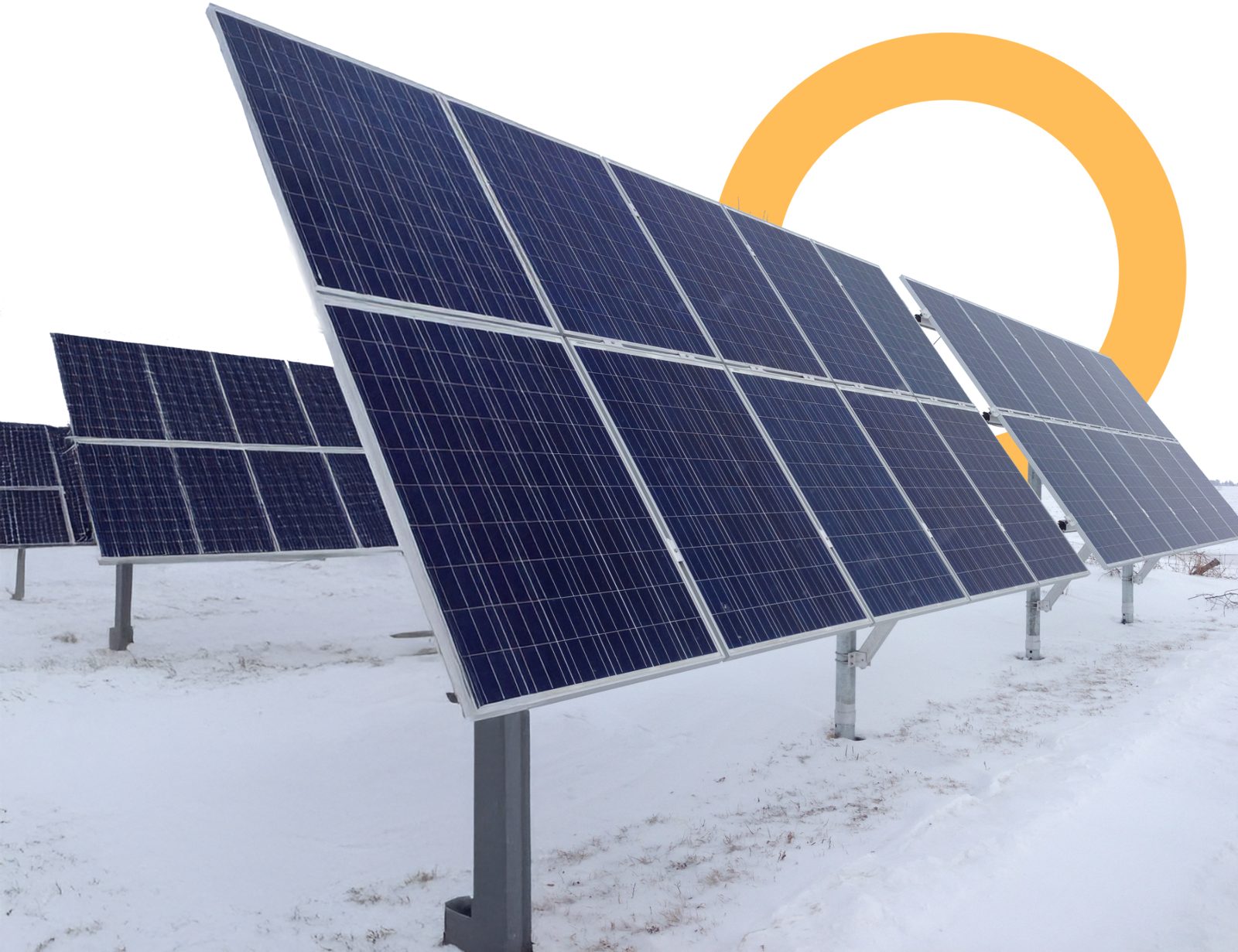
The site offers good sun exposure throughout the year, favourable to maximum output.
Soléo Énergie · Project under study
Soléo Énergie is proposing to make use of a former landfill site to produce 100% local, low-carbon electricity, in support of Québec’s energy transition.
The public information session is part of the process of presenting the project to residents, ahead of the zoning by-law amendment.
Project update
Come learn more about the project, ask your questions and share your thoughts, including on its potential impacts.
Invitation
Registration
Registering helps us plan the welcome. The session will be held on Thursday, October 22, 2026, at 7 p.m., in the council room of the borough hall (13665 Pierrefonds Boulevard).
Project overview
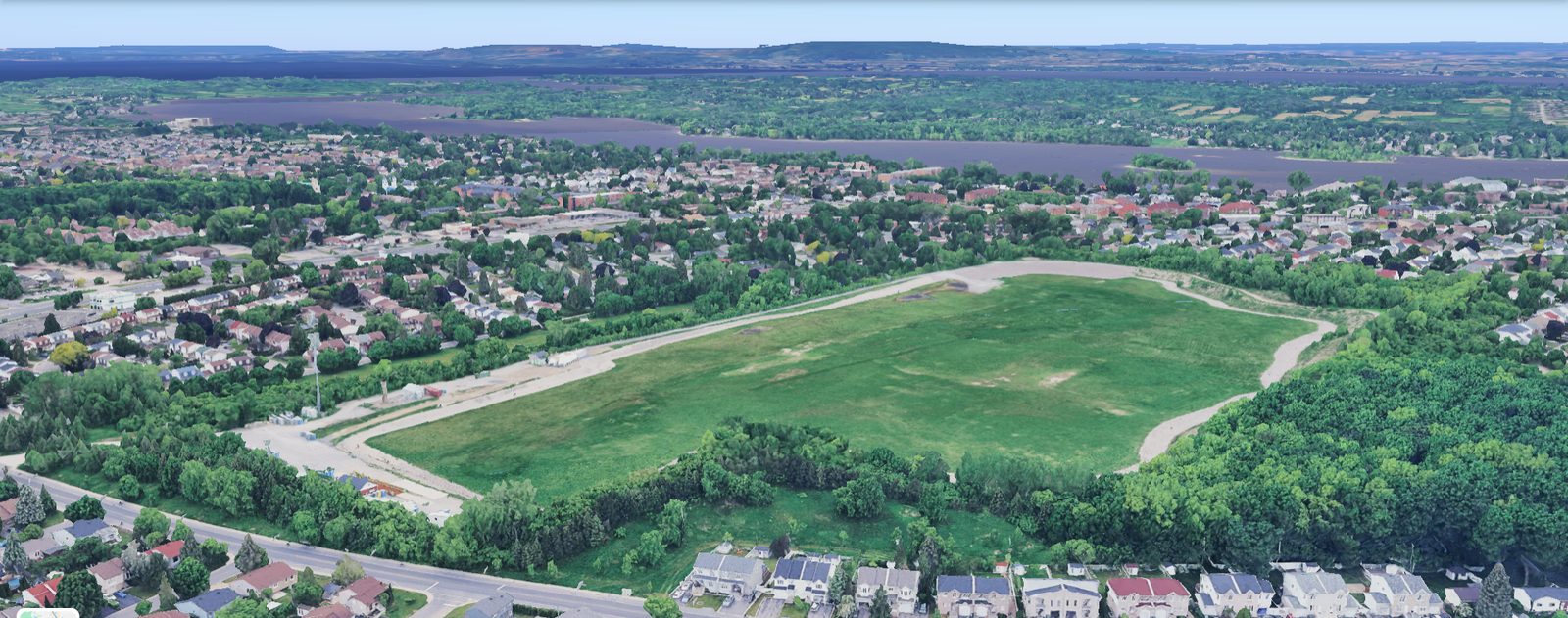
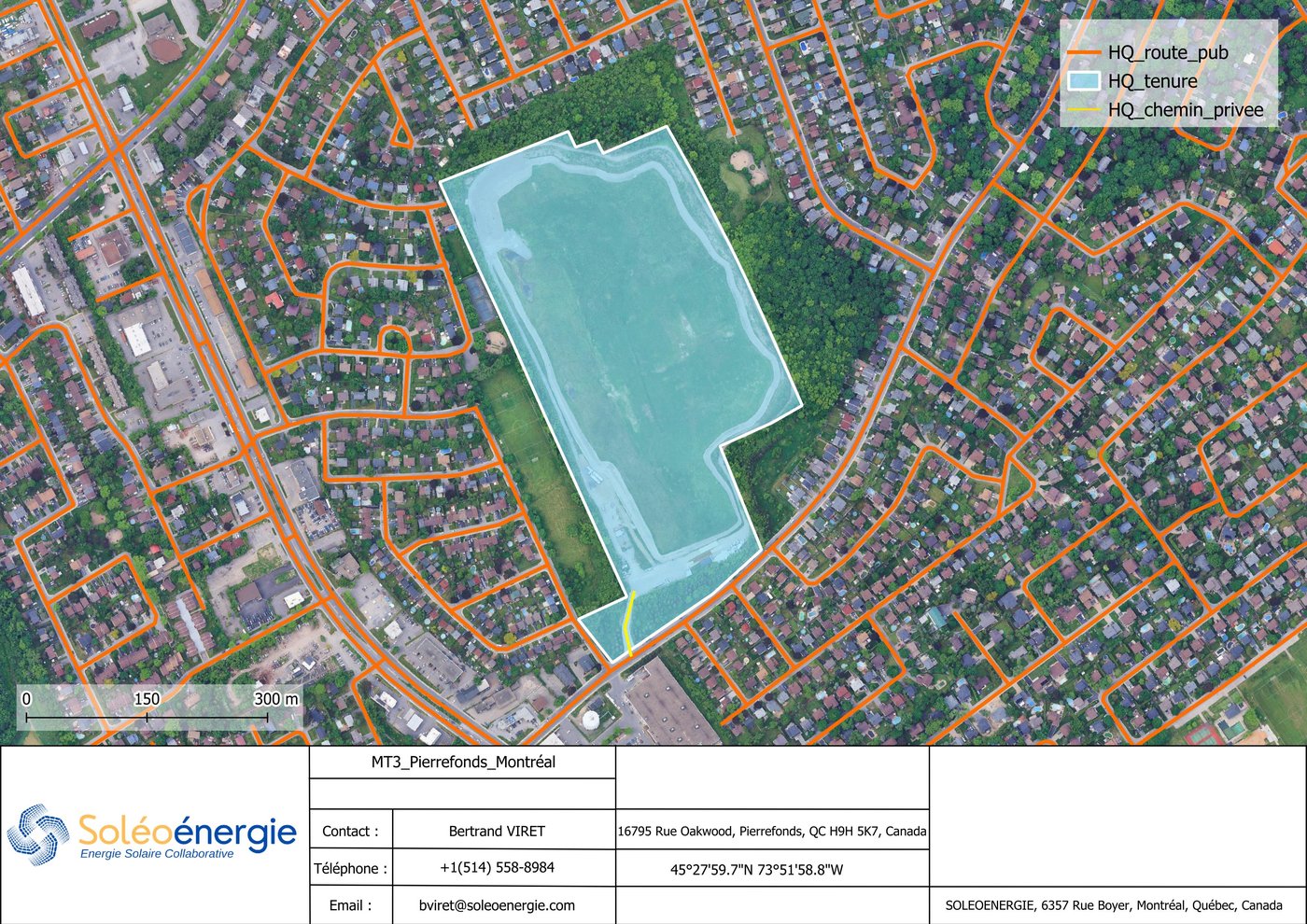
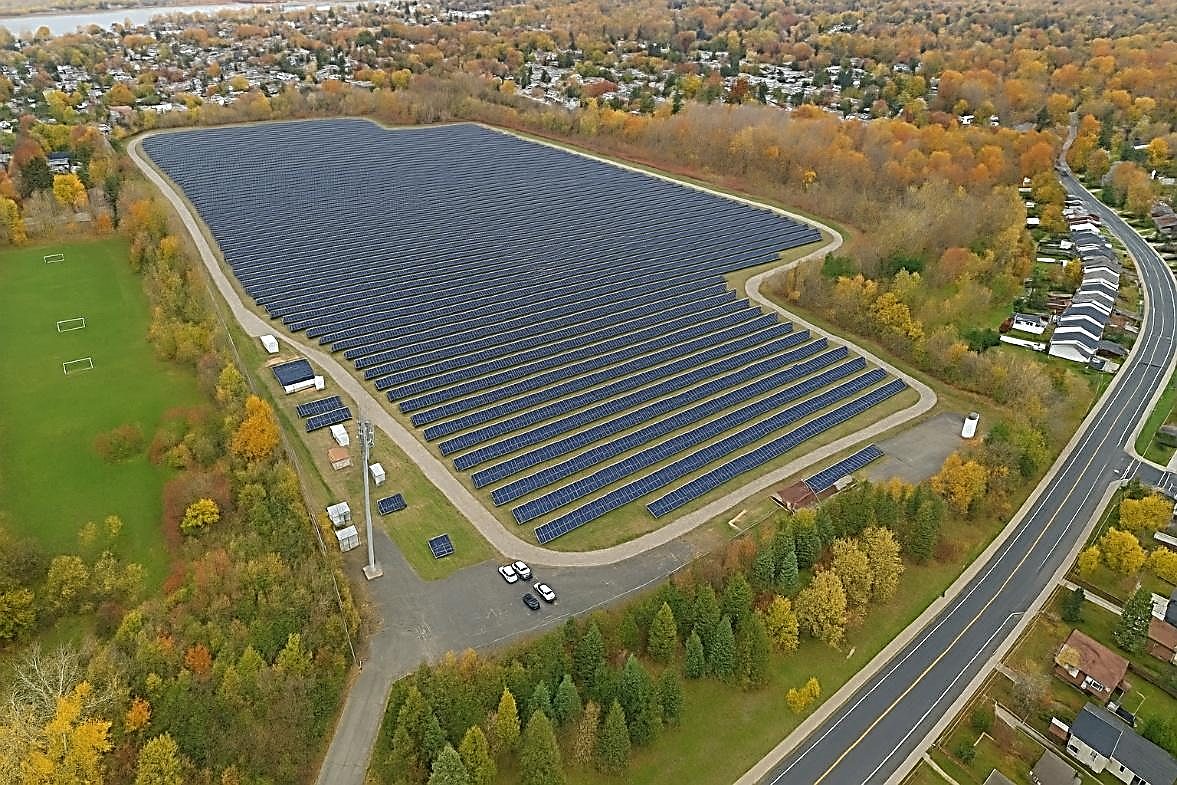
The photovoltaic power plant project would be located on the former inert waste storage site in the southern part of the borough of Pierrefonds-Roxboro, behind Duval Park, near Saint-Charles Boulevard.
If authorized, the project would produce 100% local, low-carbon energy, adding to Québec’s electricity supply, which is currently overwhelmingly hydroelectric (over 99% renewable sources on an annual basis, according to Hydro-Québec), by contributing local solar generation. The project is proposed as part of Hydro-Québec’s call for tenders for solar power (300 MW block).
Modules
257 tables of 48 modules of 740 Wp
17 tables of 24 modules of 740 Wp
Production
10.70 GWh per year
estimated annual energy
Capacity
9,430,560 Wp
or approximately 9.4 MWp
A photovoltaic power plant is a passive infrastructure: no combustion, no air emissions, no significant noise pollution and very little traffic once built. The proposed layout relies on ballasts in order to preserve the site’s membrane. Construction and operation may nonetheless cause some nuisances: these are presented in the Potential impacts and measures section.
Location
Former inert waste storage and landfill site, in the southern part of the borough, behind Duval Park, near Saint-Charles Boulevard. The land is surrounded by residential neighbourhoods.
How it works
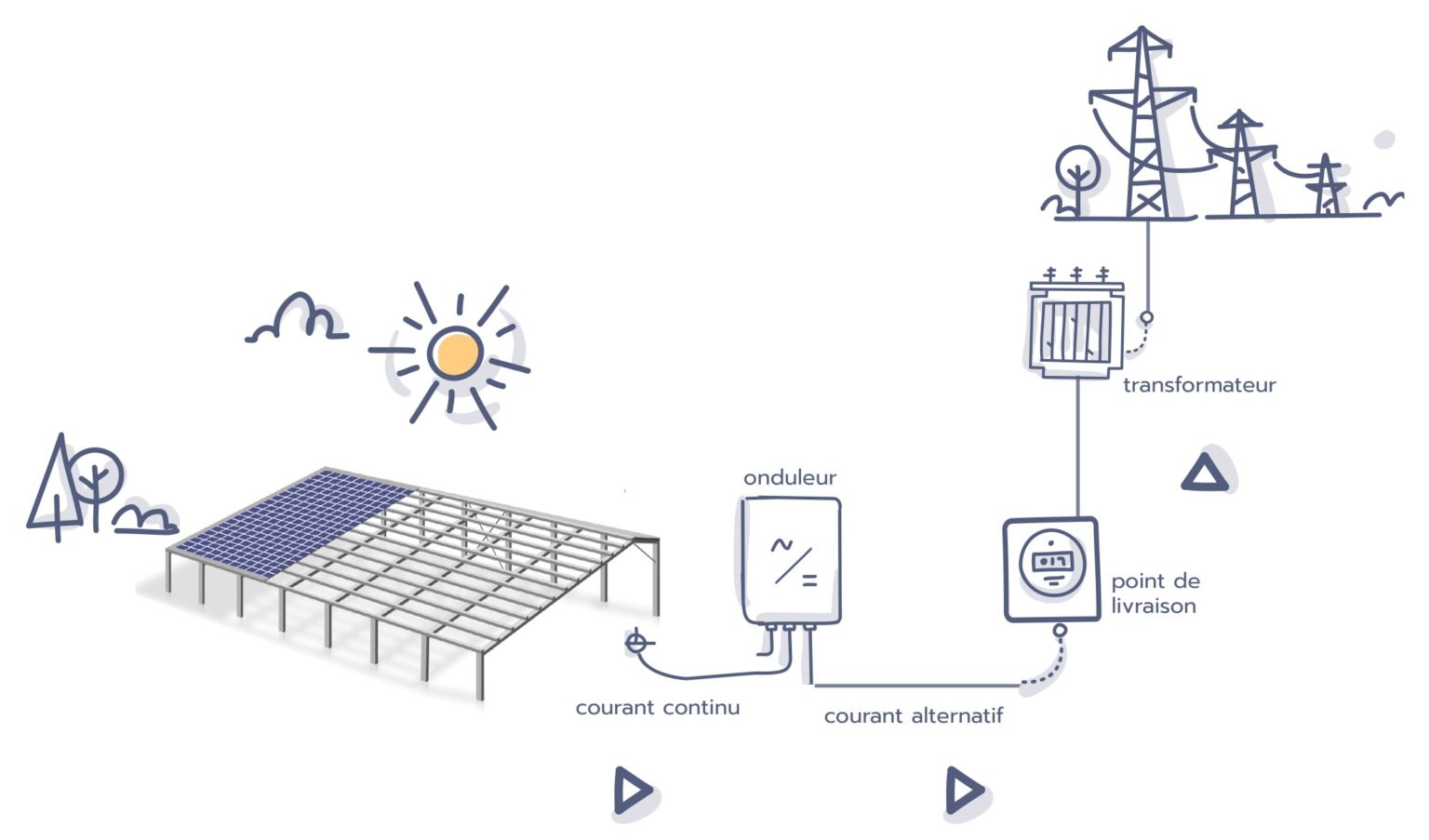
Convert solar energy directly into electricity (direct current).
Converts direct current into alternating current, compatible with the grid.
Raises the voltage to that of the electricity distribution grid.
The electricity produced is intended for the grid, for the benefit of Québec.
Site selection
Converting landfill sites into solar power plants is a common practice in North America and Europe: it turns constrained land into an environmental asset, without compromising its integrity.
The site offers good sun exposure throughout the year, favourable to maximum output.
Bordered by gently rising ground and by the wooded edges of Duval Park, the site lends itself to discreet integration into the neighbourhood, without being invisible (see Potential impacts).
The project aims to make use of land with permanent use constraints, in support of the energy transition.
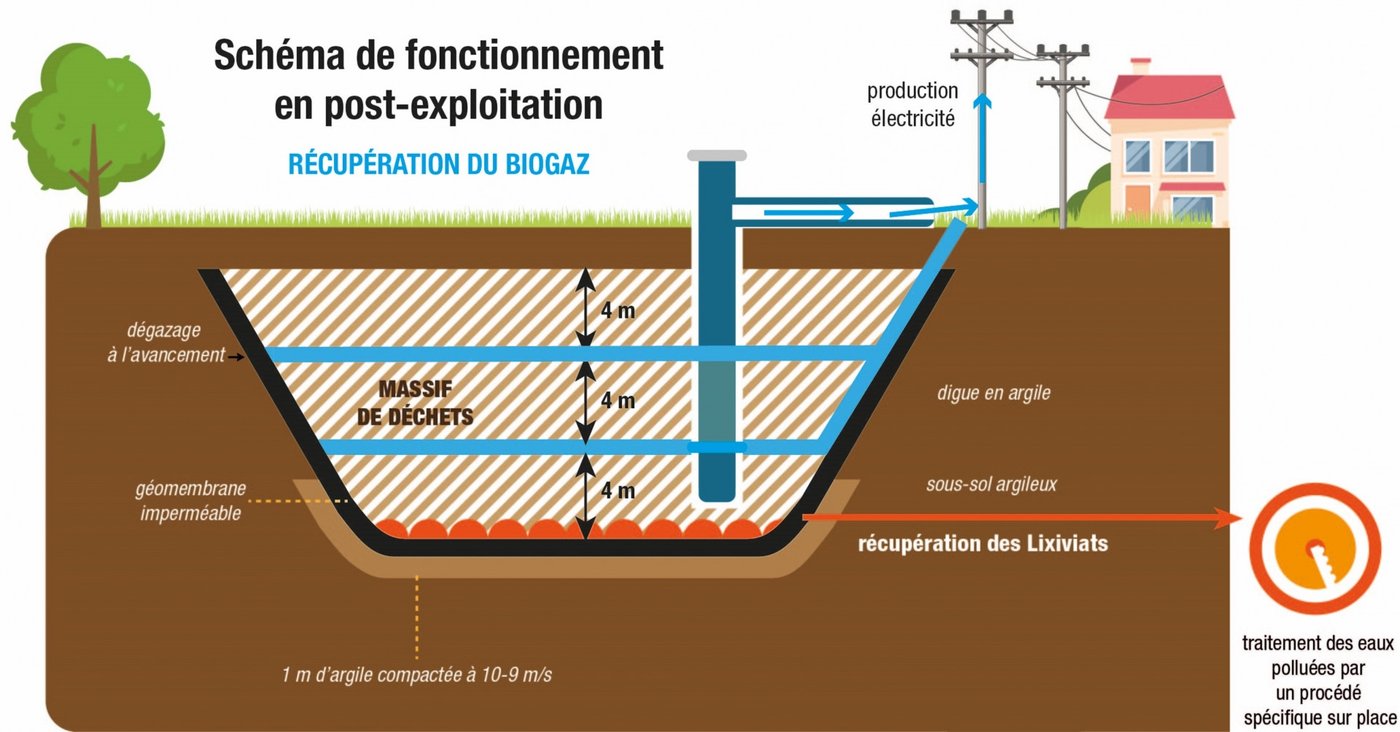
The project is designed to maintain all biogas management systems, including the flares, and to comply with the requirements of the applicable certificate of authorization.
We will choose installation methods that avoid any significant disturbance of the surface soil, so that:
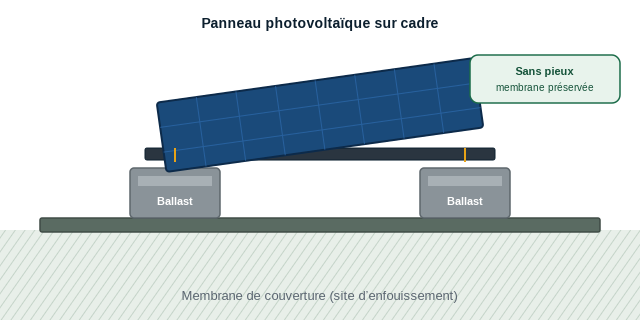
The proposed layout relies on ballasts (weighted blocks placed on the surface), rather than on piles driven into the ground. This method aims to avoid puncturing or damaging the landfill site’s cover membrane.
Transparency
The site is surrounded by residential neighbourhoods of the borough of Pierrefonds-Roxboro. Like any infrastructure, a solar power plant has effects on its neighbours and on the environment, both during construction and during operation. Soléo Énergie presents them here, along with the measures proposed to avoid or reduce them. The project is preliminary. It will have to obtain the necessary authorizations, and its design could still change.
Construction
Construction would be the most sensitive period for local residents: deliveries, machinery noise, dust.
Operation
In operation, a plant of this type produces no combustion and no air emissions, and generates very little traffic.
Stormwater
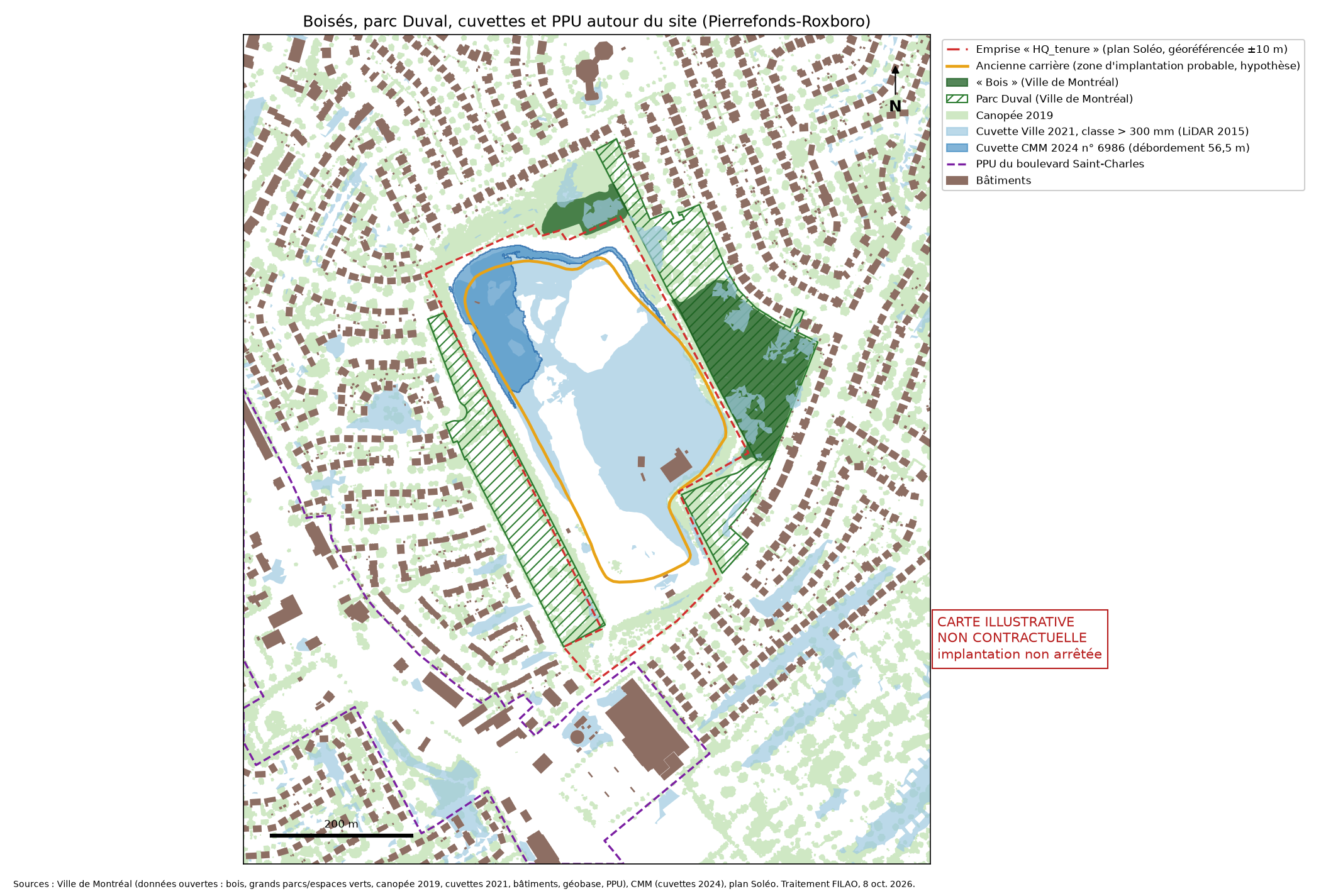
The City of Montréal’s map of retention depressions identifies a natural depression on the site. According to an initial analysis of public topographic data, this depression currently collects rainwater from a large part of the site and releases nothing toward neighbouring streets during the heavy reference rainfalls used by municipal regulations.
The project aims to preserve this role:
We will design stormwater management in accordance with municipal by-law 20-030 and Québec’s Guide de gestion des eaux pluviales, and we will submit it to the City for approval.
Natural environments
Protected woodlands and Duval Park border the site to the east and northeast.
Urban integration
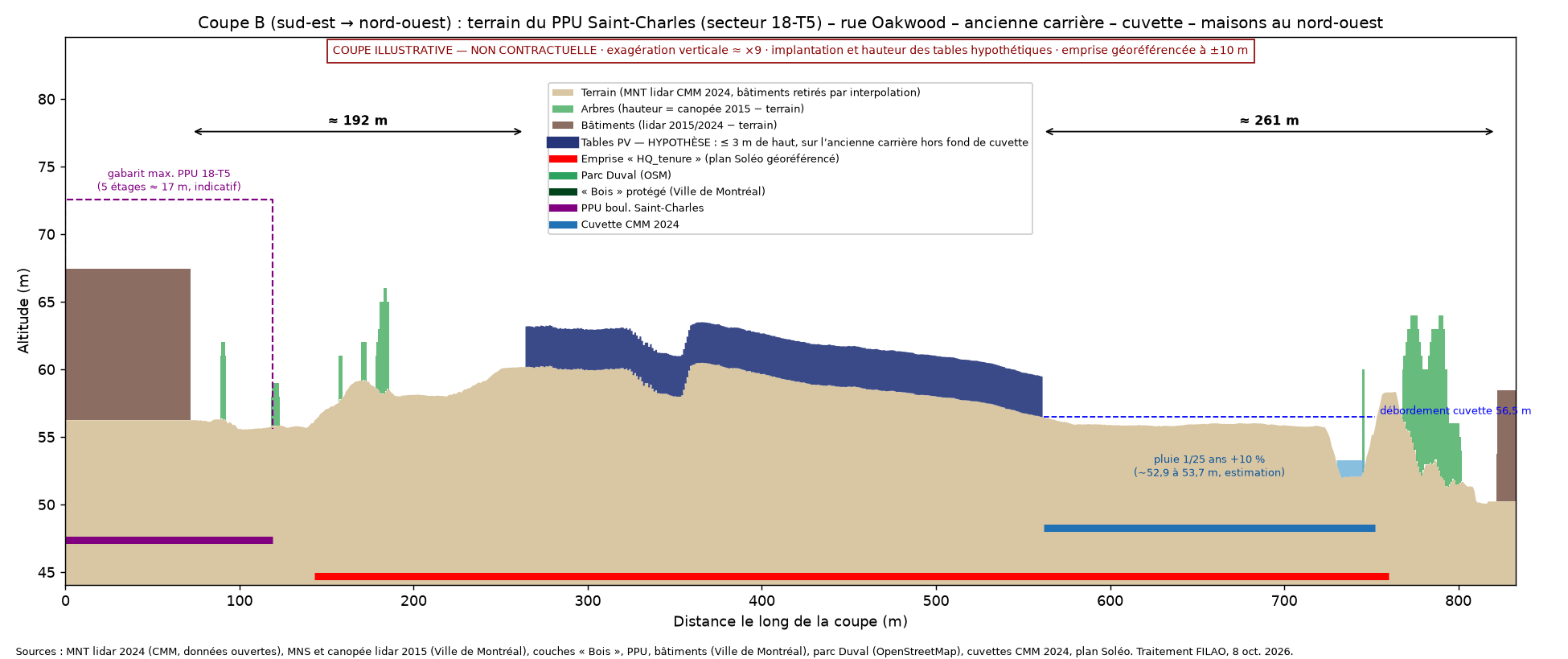
Across Oakwood Street, the site faces the Saint-Charles Boulevard area. This area is covered by a special planning program (plan particulier d’urbanisme, PPU), which notably provides for the densification of the land directly opposite.
The project requires an amendment to the uses authorized in this zone by the borough’s zoning by-law. This involves a regulatory amendment subject to public consultation.
Safety
Follow-up
Perspectives
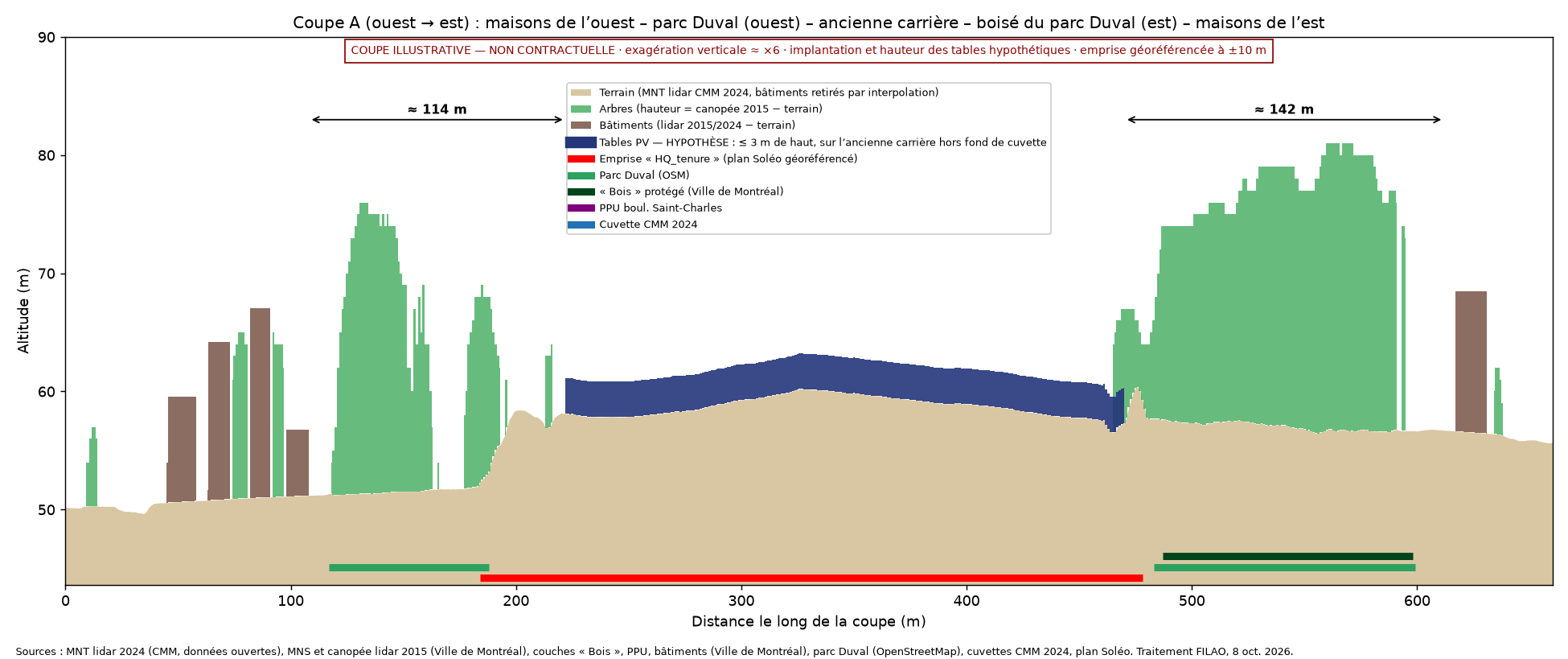
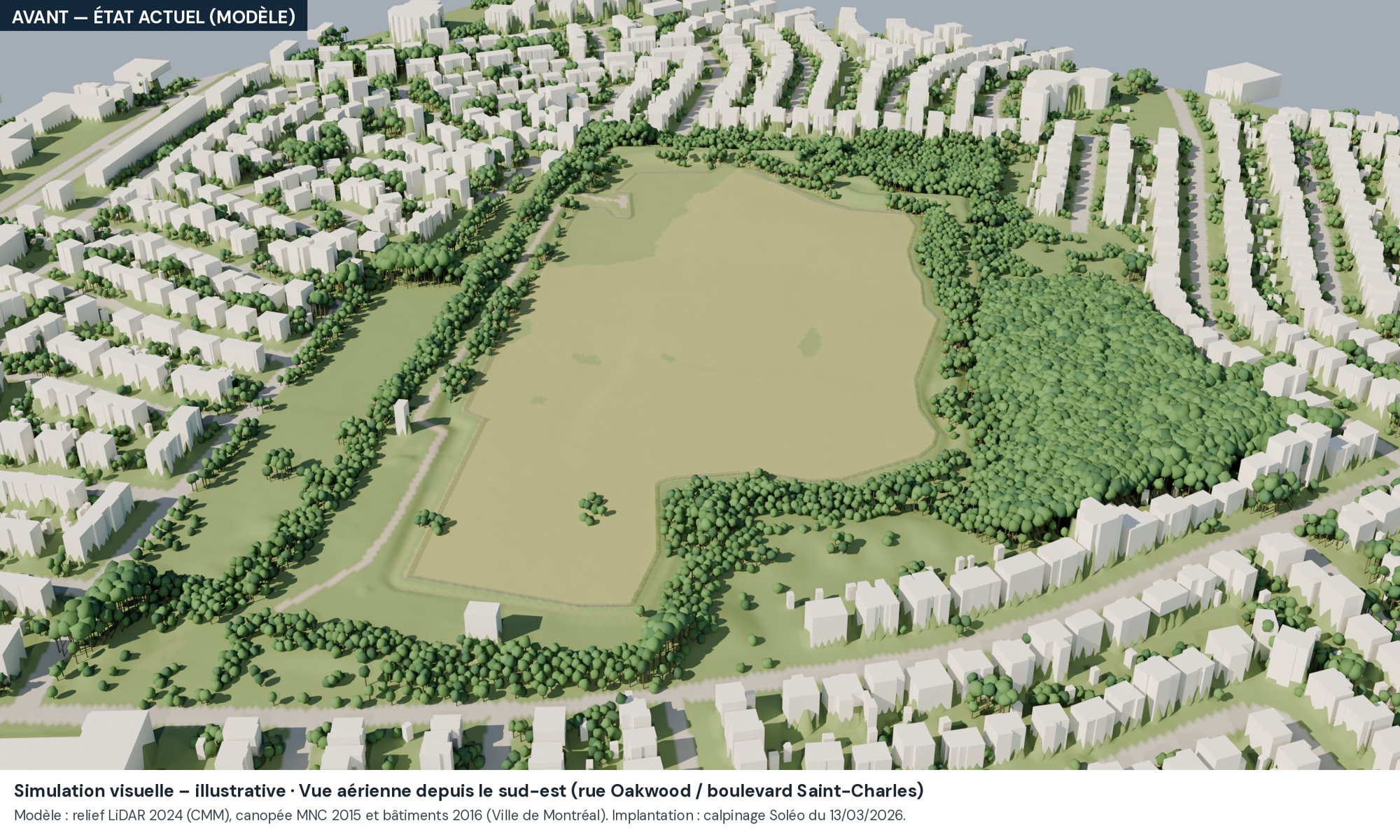
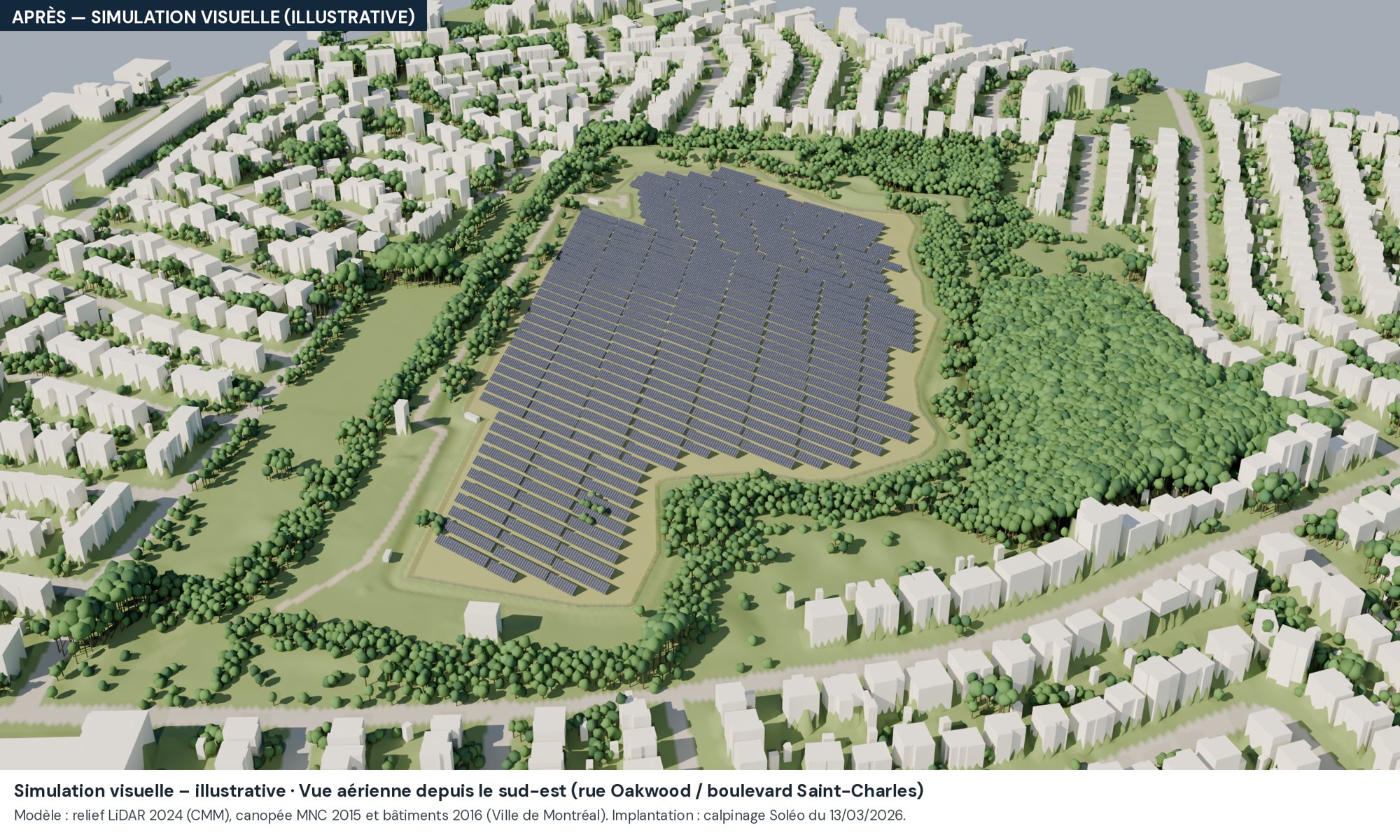
These simulations are based on the planned layout, LiDAR topography and existing vegetation. From neighbouring streets, the tables would not be visible in summer; they would be partly visible from Oakwood Street when the trees are bare. Visual simulation – illustrative.
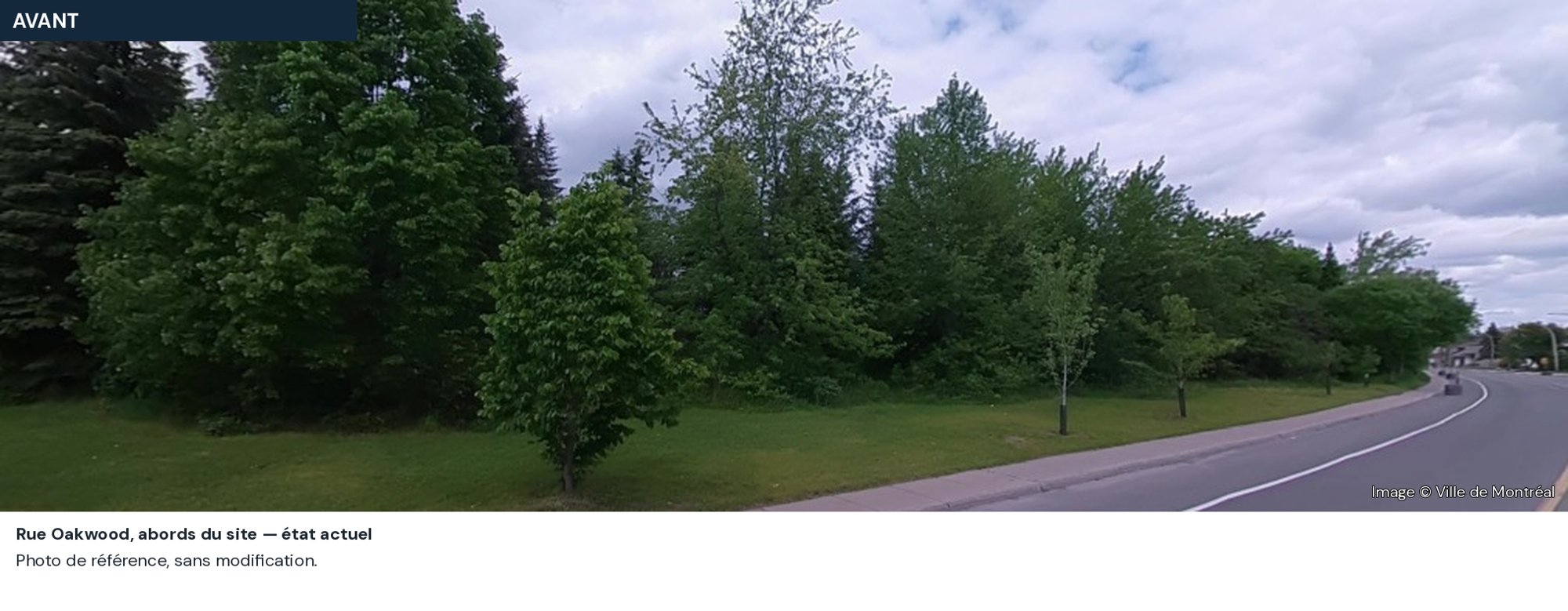
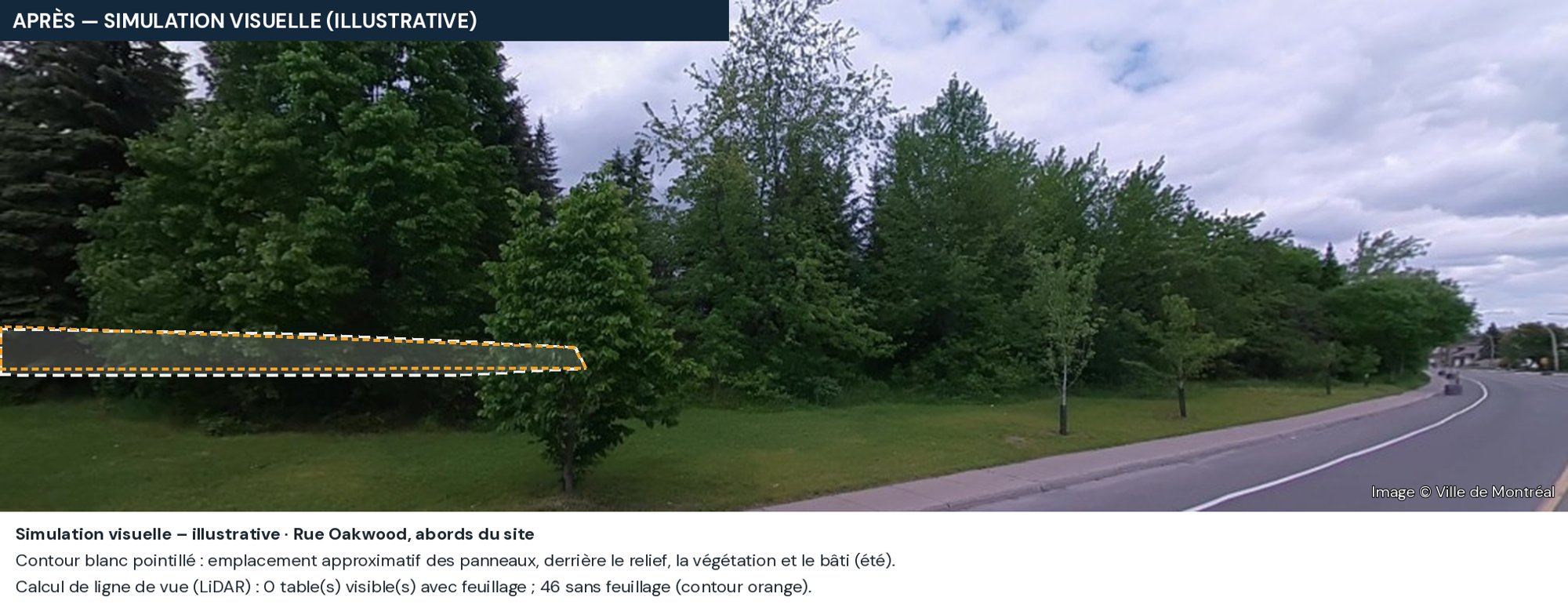
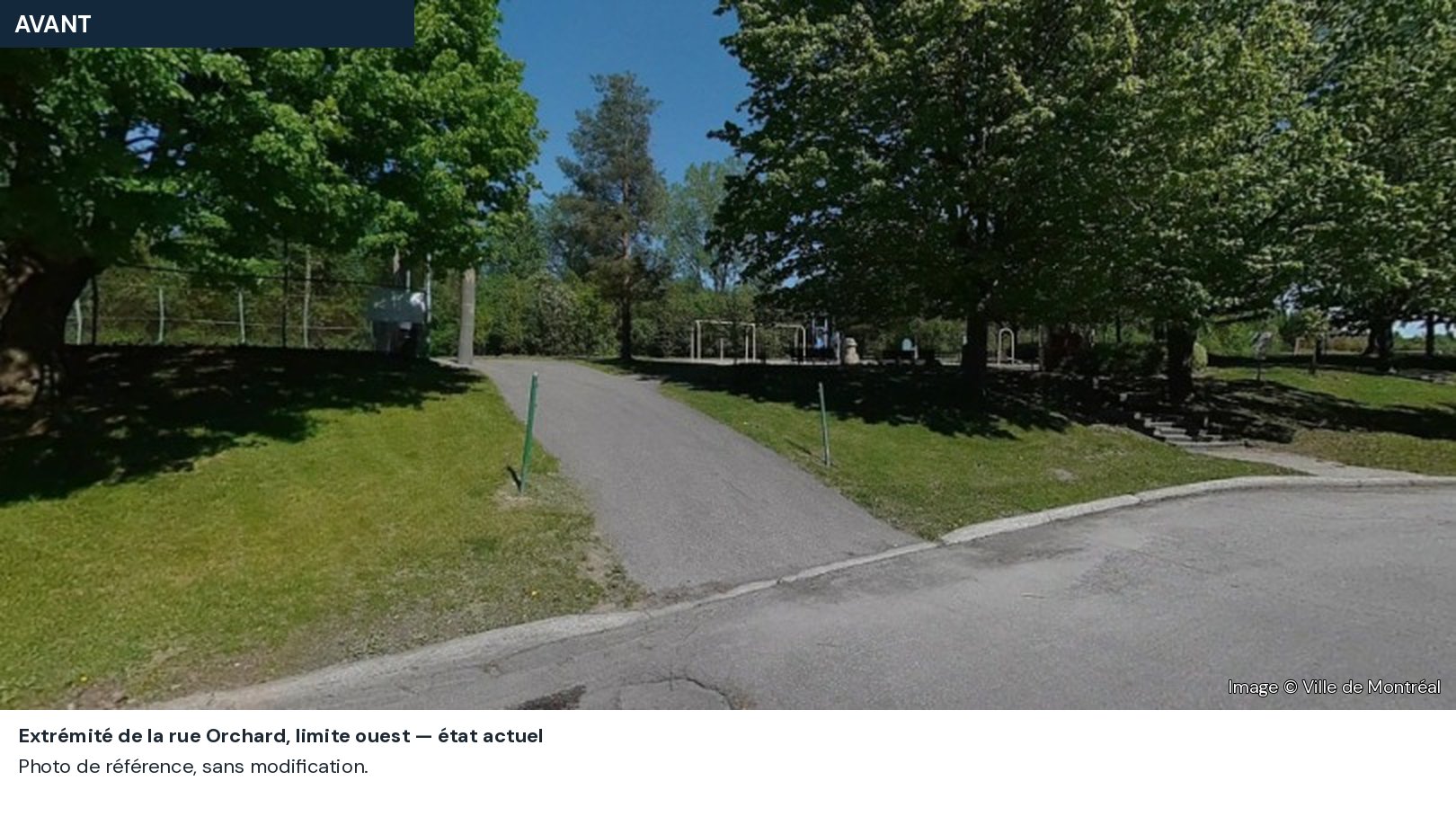
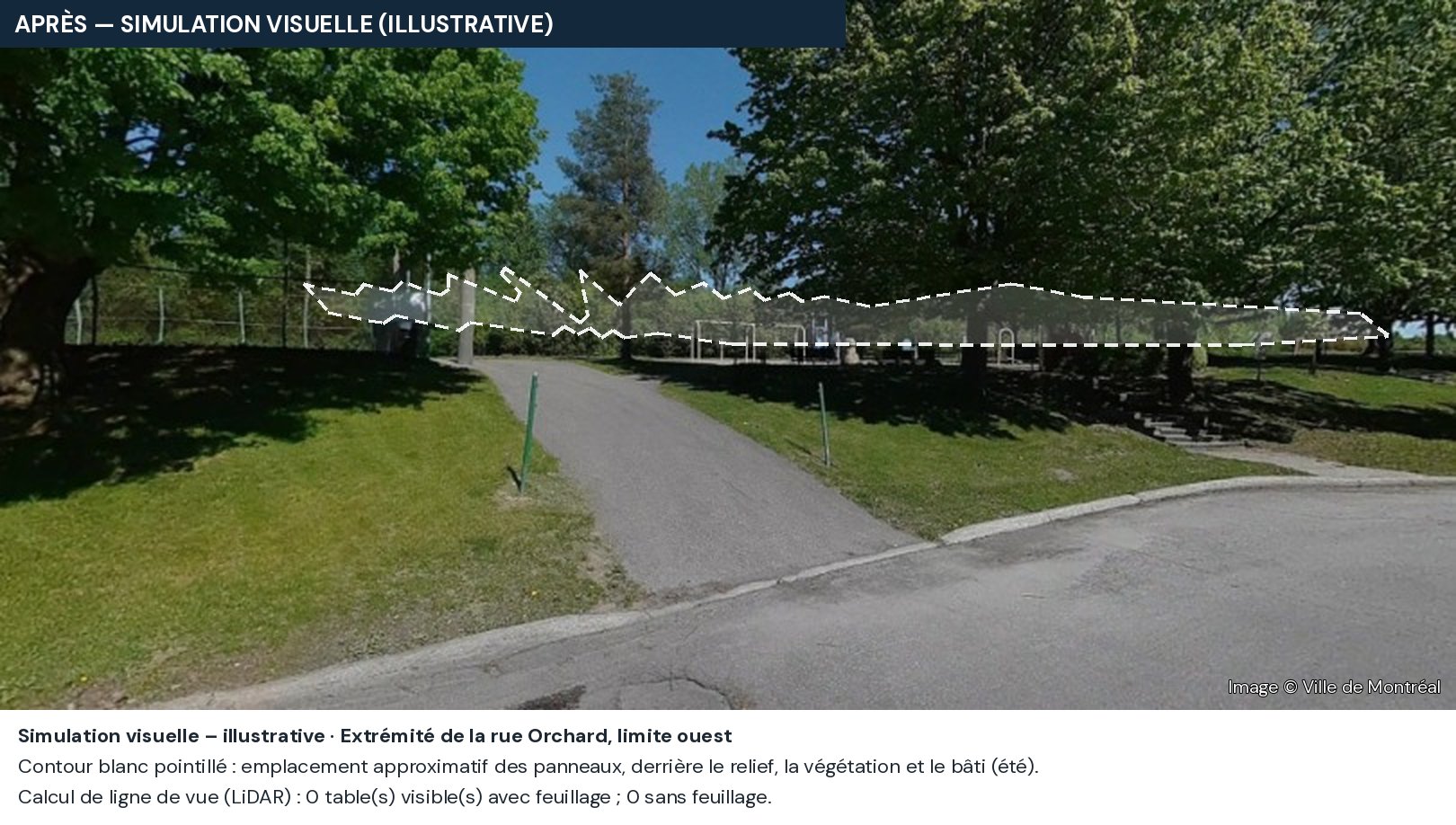
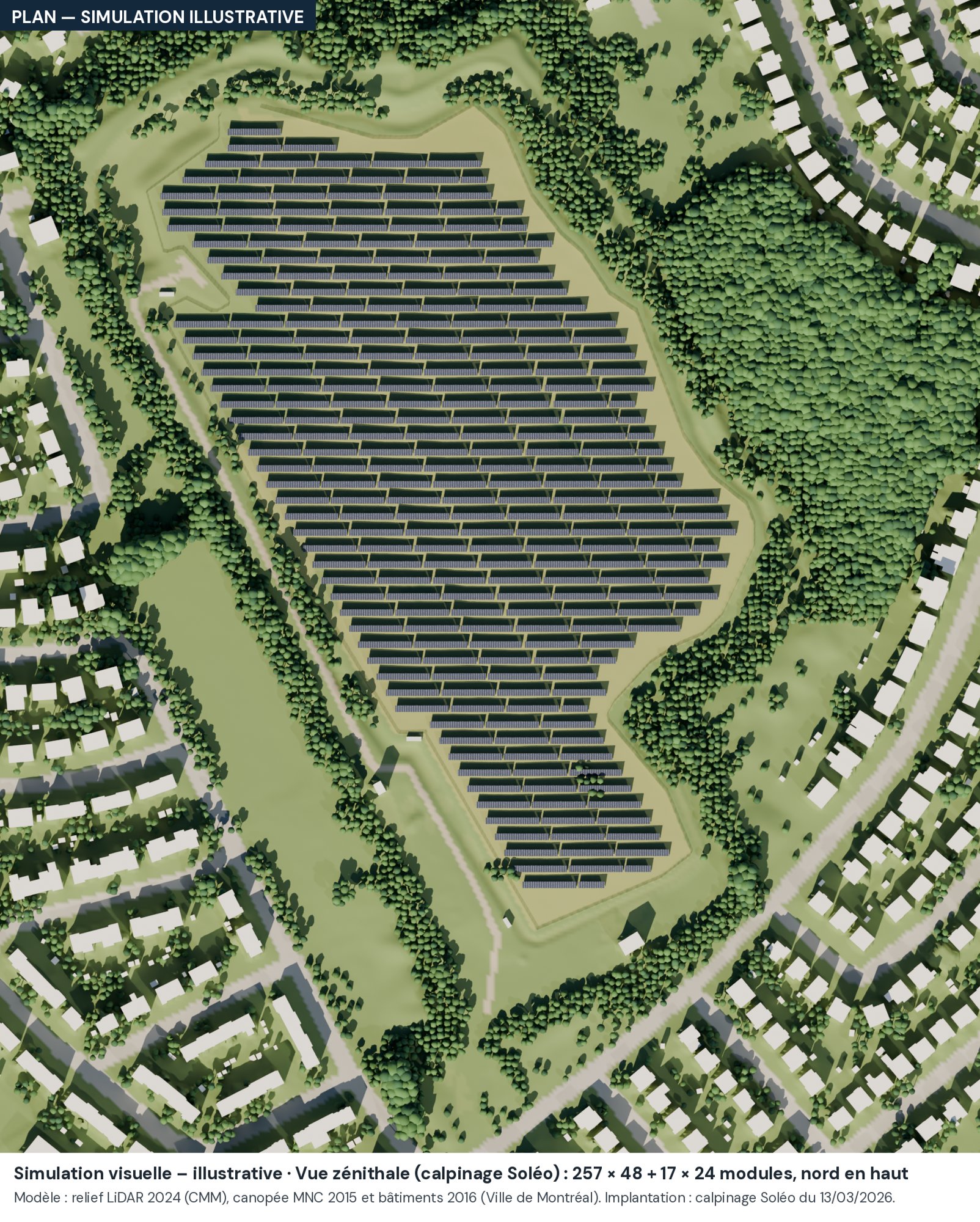
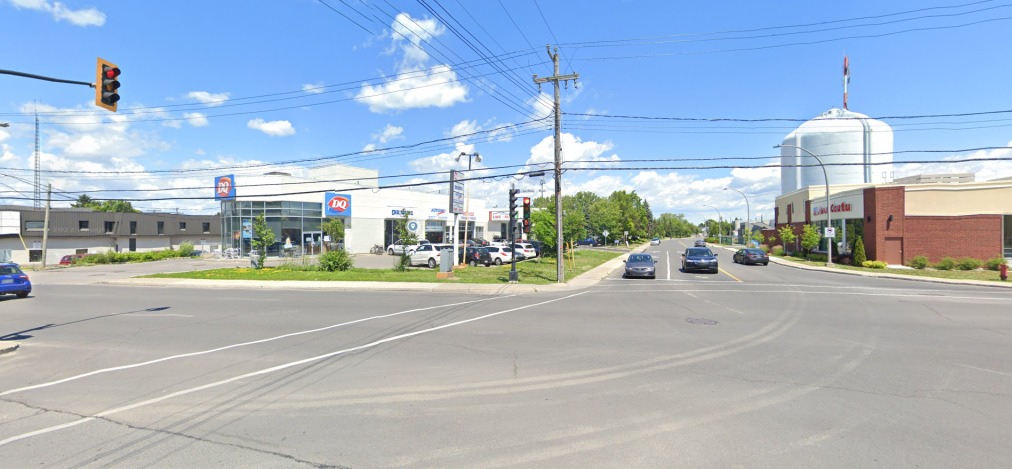
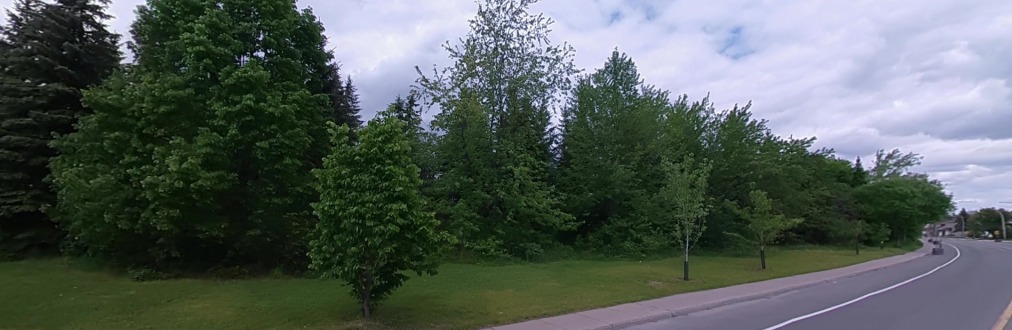
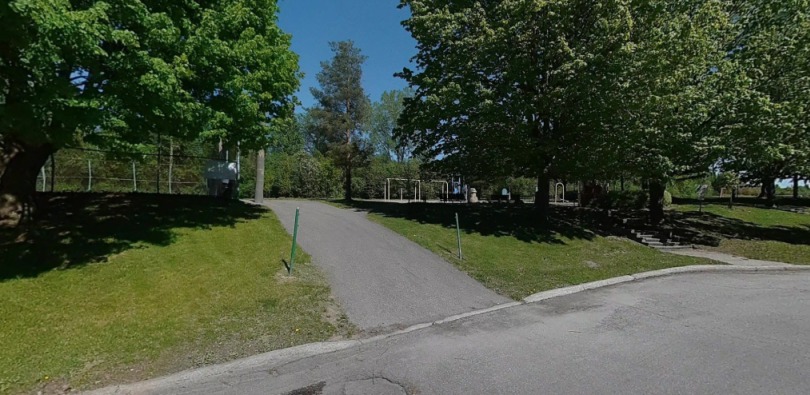
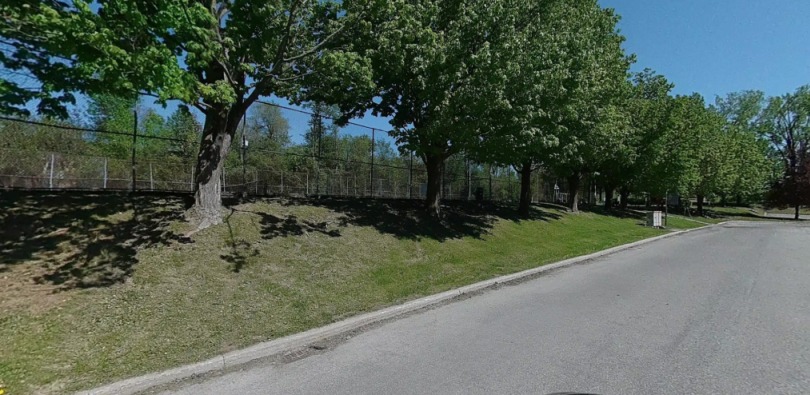
The site today, from the neighbouring streets and park
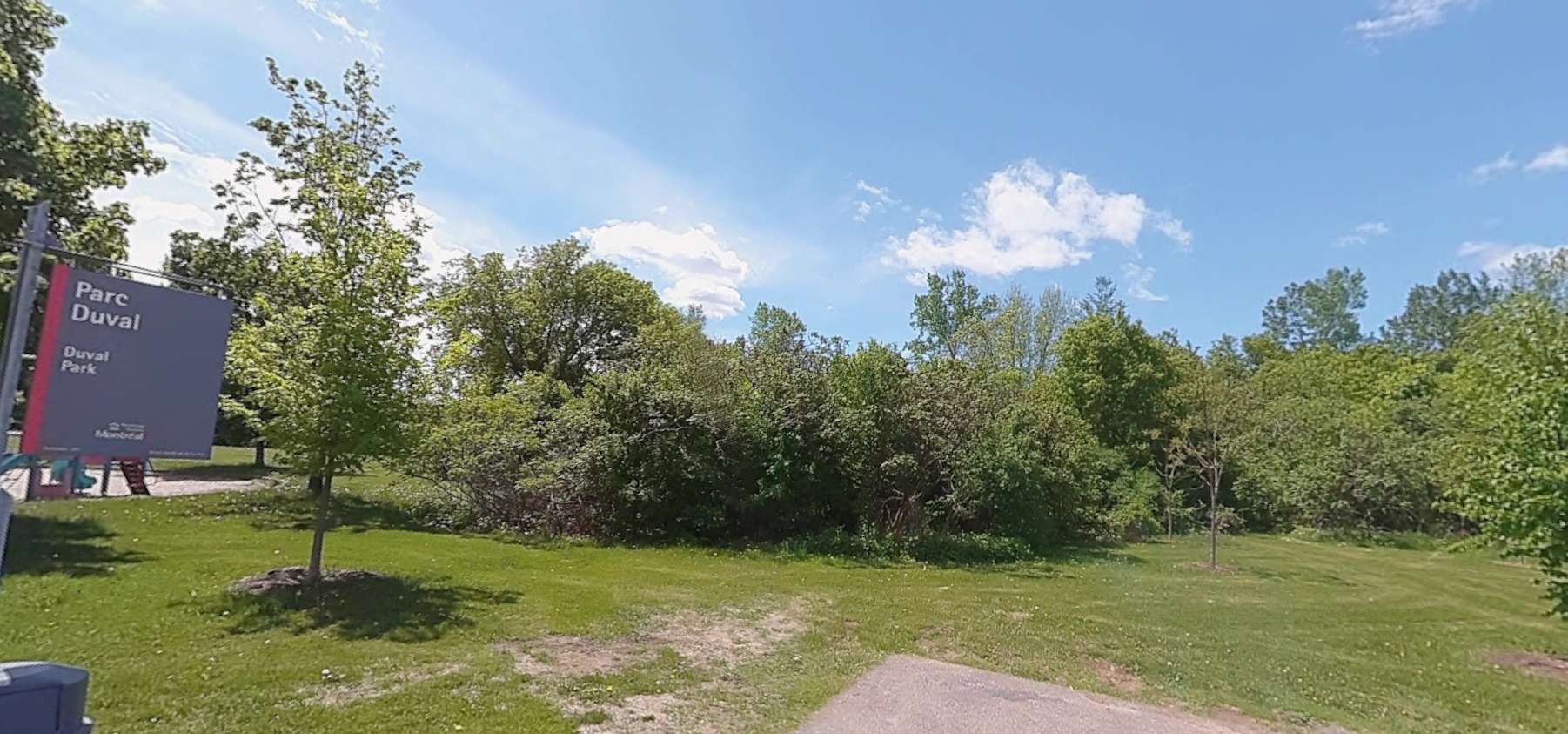
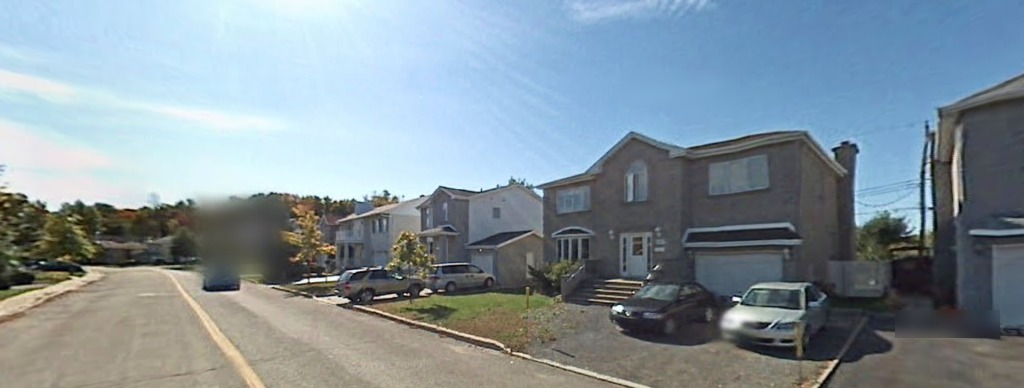
Environment and integration
The project would not result in any additional soil sealing, since it aims to make use of land that is already constrained. The gently rising ground and the wooded edges of Duval Park limit views of the plant, without making it invisible, particularly in winter or from upper floors.
Before any construction, we will carry out several validations:
Steps and approvals
The project requires an amendment to the authorized uses. This amendment to the borough’s zoning by-law would be subject to public consultation.
The site is next to the Saint-Charles Boulevard area, which is covered by a special planning program (plan particulier d’urbanisme, PPU). A PPU (formerly called a programme particulier d’urbanisme) is a component of Montréal’s urban plan that sets out detailed planning for a specific area. The Saint-Charles Boulevard PPU, incorporated into the Plan d’urbanisme et de mobilité 2050 (in force since June 2025), provides for the gradual densification of the boulevard. Across from the site, south of Oakwood Street, it provides for mixed-use buildings of 3 to 5 storeys.
The site itself, where the solar park would be located, is governed by the Pierrefonds-Roxboro borough zoning by-law. The aim is not to change its designation, but to adapt the by-law to allow such a use in the zone. Legally, this adaptation is still an amendment to the zoning by-law, subject to public consultation.
This process falls under the borough council. It includes an opinion from the urban planning advisory committee (CCU), a first draft by-law, a public consultation meeting, a second draft by-law and, if residents were to request it, a referendum process. This is followed by a conformity review by the City and the other required authorizations.
Soléo Énergie’s information session takes place ahead of all these steps.
By its resolution CA26 29 0076 of March 26, 2026, adopted unanimously, the Pierrefonds-Roxboro borough council supported the submission of the project to Hydro-Québec and committed to making the regulatory amendments required for its conformity.
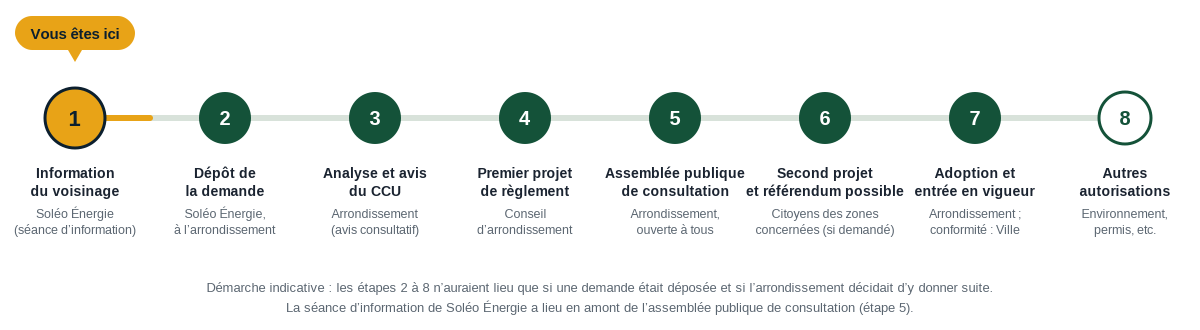
Soléo Énergie presents the project and gathers your questions (information session).
Soléo Énergie will file an application with the borough to amend the zoning by-law.
The borough’s departments review the application; the urban planning advisory committee gives its opinion.
The borough council decides whether to initiate the amendment.
Organized by the borough and open to all: this is the official consultation.
Residents of the zones concerned may request a referendum process.
Adoption by the borough council, followed by a conformity review by the City.
Environmental authorizations, permits, etc., before any construction.
You are here: information step. This public information session is part of the process of presenting the project to residents, ahead of the zoning by-law amendment.
Benefits
Beyond producing renewable energy, the project aims to bring benefits to the area, the City and the population. These benefits should be weighed against the potential impacts presented above.
Secure the long-term use of the site and make use of a former landfill site that would otherwise be of little use.
Contribute to the directions of Montréal’s Climate Plan, by adding local solar generation to Québec’s electricity supply.
Investment, involvement of specialized companies, jobs, development of solar energy skills and tax contributions associated with the infrastructure.
Questions and answers
Here are the main questions asked at the public information session held on October 22, 2026, at the Pierrefonds-Roxboro borough hall, with our answers. The project is under study: these answers reflect its current status and may change.
Soléo Énergie is proposing a ground-mounted solar plant of approximately 9.4 MWp on the former landfill site behind Parc Duval, covering about 8.5 ha. Annual production is estimated at 10.70 GWh of local, low-carbon electricity that would be fed into the Hydro-Québec grid. The project is under study and remains subject to the required authorizations.
The total cost is estimated at about $20 million: about $15 million for construction, $200,000 to $300,000 for the grid connection and $250,000 to $350,000 for studies. Financing would be about 10% equity and 90% debt. Hydro-Québec requires substantial financial guarantees before signing a contract, and Soléo Énergie had to demonstrate its capacity when registering for the call for tenders.
The project calls for 740 Wp modules. Their origin has not yet been determined and will be specified when the supplier is selected. The module market is mostly Asian, but supply-chain traceability is possible.
Standard modules typically carry a 25-year product warranty and a 30-year performance warranty. All installations are designed to be removable, and a decommissioning plan will be submitted to the authorities. Hydro-Québec’s tender requirements also call for guarantees covering decommissioning.
Soléo Énergie develops its projects on degraded or under-used sites, as well as agrivoltaic projects. The Pierrefonds-Roxboro project is one of the first of its kind in an urban setting close to homes; another Soléo Énergie project is located in an industrial zone on the Côte-Nord. Ground-mounted solar plants already operate in Québec, for example near Varennes and La Prairie.
Hydro-Québec is the buyer of the electricity: if the project is selected, it would sign a 25-year power purchase agreement with Soléo Énergie. All permits and authorizations would then still have to be obtained, mainly from the borough and, in some cases, from Québec ministries. The project can therefore only move forward if all parties agree.
The project was submitted on March 31, 2026, under Hydro-Québec’s A/O 2025-01 solar call for tenders (300 MW). Eighteen bidders responded, and Soléo Énergie ranks fourth in terms of capacity submitted. Hydro-Québec is expected to announce the selected projects in the first quarter of 2027.
If the project is selected: Hydro-Québec announces the successful bidders in Q1 2027, the power purchase agreement is signed in Q2 2027, permits are obtained in 2028, and construction takes place in 2029, with commissioning targeted for December 1, 2029. The zoning by-law amendment would follow the borough’s procedure in parallel, as described in the Process section.
The exact duration of the work has not yet been determined; construction is planned for 2029. The work would be relatively light: no pile driving thanks to the ballasts, truck access from the south and reduced hours compared with what the regulations allow.
The October 22, 2026, session was an information initiative by Soléo Énergie, ahead of the zoning by-law amendment. The official consultation will come later: the borough will hold a public consultation meeting open to all, and residents of the zones concerned may request a referendum process. You can also write to us at any time at info@soleoenergie.com.
The current zoning allows a park, but the land is a former landfill closed in 2019, covered by a membrane and subject to 30 years of monitoring. These constraints severely limit how it can be used. The solar project proposes to make use of the land without compromising its cover.
The site is owned by Les entreprises environnementales Pierrefonds inc. (LEEP), which carries out post-closure monitoring. This mandatory monitoring (biogas, leachate, water) will continue to be performed by the operator, as it is today. Soléo Énergie will coordinate its construction and operations with the operator.
Yes. The panels would sit on concrete ballasts, with no piles or trenches, and all cables would run above ground. The layout avoids the biogas wells, flares and leachate pipes, which will remain in service and accessible to the operator at all times, with a safety distance. Electrical equipment (telecommunication antennas) already coexists with these systems on the site.
Environmental obligations related to site management, including in the event of an incident, remain the responsibility of the site operator. Before construction, Soléo Énergie will carry out a geotechnical study and an environmental validation. An emergency response plan will be prepared with the Service de sécurité incendie de Montréal, with firebreak zones around the biogas installations.
No. A solar plant produces no odour and involves no combustion. Odours that may come from the former landfill are linked to biogas, which is managed by the operator, and do not depend on the solar project. The project keeps all biogas collection systems in place.
The risks are limited: no piles (the membrane is preserved), biogas systems are maintained, no trees are cut and stormwater management is watertight. The ground is not sealed and vegetation is maintained under the panels. A geotechnical study and an environmental validation are planned before any construction.
The site is fenced and not very attractive to mammals. The main potential impact concerns birds: construction will avoid the nesting period. If the Ministry of the Environment requires it, wildlife and plant inventories will be carried out; if a sensitive species were found, measures would be taken, such as a panel-free perimeter.
Given its capacity, the project would probably not be subject to a mandatory impact assessment or a BAPE review. However, because it adds an activity to a site that is already regulated, it will require an amendment to the site’s environmental authorization from the Ministry of the Environment. The ministry may then require inventories and an impact analysis, which Soléo Énergie would carry out.
The project is limited to the former landfill site, which is fenced; no new public park is planned there. Parc Duval and the neighbouring woodlands are preserved: no trees will be cut.
The inverters only operate during the day and would be located in the centre of the site, away from homes, in compliance with Québec noise criteria. For similar projects, expected levels are in the range of 30 to 40 dBA, the equivalent of a quiet room. A noise map will be produced if the project is selected by Hydro-Québec.
Modules with anti-reflective glass are planned to limit glare. The exact specifications of the anti-reflective coating, including its durability, will be confirmed when the supplier is selected.
The equipment is of the same nature as the electricity already present in every home. Electromagnetic fields decrease rapidly with distance and return to background levels at a distance of roughly 50 to 100 m; according to available studies, they have no health effect at residential distances. A plant of this size is not comparable to Hydro-Québec’s large substations of several hundred megawatts.
During operation, traffic would be very light. During construction, trucks would use the south access, away from residential streets, and the traffic plan would be adapted to school arrival and departure times. Truck schedules will be set before construction, in consultation with the citizen monitoring committee.
On the site, cables would run at ground level in cable trays, with no excavation, and electrical equipment would be grouped in the centre. Hydro-Québec issued a favourable technical orientation (DOT) for connecting the plant at this location. The details will be set by Hydro-Québec; the connection would most likely be made to the existing poles, from the site entrance.
The tables would be low and tilted: about 60 to 80 cm at the lowest point and about 2.80 m at the highest, with about 5 m between rows. According to the simulations, they would not be visible from neighbouring streets in summer, and partly visible from Oakwood Street when the trees are bare. No permanent lighting is planned, and the fence would be a neutral colour.
We have no data specific to this area. Studies on the subject show mixed results, most often neutral. Nor should the project be expected to increase home values. It would be built on land that is already constrained, a former landfill site.
There is no indication that additional home insurance would be required for neighbouring homes.
Yes. Soléo Énergie will set up a citizen monitoring committee bringing together local residents, the borough and Soléo Énergie, and wants it to include citizen representatives. It would be consulted before construction, in particular on truck schedules, to reduce nuisances. Anyone interested can write to info@soleoenergie.com.
If the project is selected, it calls for a royalty of $3,000 per MWp per year paid to the borough, for the benefit of the community. Other measures include the citizen monitoring committee, an educational project with local schools and possibly beehives on the site. The project involves no cost to taxpayers.
No individual compensation for residents is planned. Benefits would flow through the royalty paid to the borough and through the measures planned to reduce construction nuisances.
Soléo Énergie would like to open part of the project’s equity (about $2 million) to residents and the borough through community financing. This type of participation does not yet exist in Québec for these calls for tenders and would need to be enabled by Hydro-Québec. Residents can also group together, for example as a co-operative, to partner in projects.
Have another question? Write to us at info@soleoenergie.com.
Documents
Other documents (studies, public information sheets) may be added as the project progresses.
About
Soléo Énergie Inc. is a Québec company based in Montréal. It positions itself as a developer of photovoltaic and agrivoltaic projects in Québec, making use of underused sites to turn them into sources of clean and profitable energy.
With more than 20 years of experience in the energy and civil engineering sectors, the company actively contributes to Québec’s energy transition. It acts as a creator of synergies among all stakeholders — agricultural, environmental, non-profit, community and political — in order to design sustainable projects that benefit everyone and respect the environment.
Dialogue
Soléo Énergie places particular importance on transparency and dialogue with the community. We remain available to discuss each of these points in more detail and to support the borough in the next steps of the project’s assessment.
Soléo Énergie Inc.
6357 Boyer Street
Montréal (Québec) H2S 2J2
Comments or questions about the website or the project? Write to us at info@soleoenergie.com.
Write to Soléo Énergie